



When choosing sunscreen, most people look for one number: SPF. But SPF alone doesn’t tell the whole story.
To truly protect your skin, you need to understand the difference betweenUVA and UVB rays — and why broad-spectrum protection is essential year-round.
Let’s break it down clearly and simply.
UVB Rays: The Burners
UVB rays are the ones most people are familiar with. They are primarily responsible for sunburn, redness, blistering and direct DNA damage.
UVB intensity fluctuates depending on season and time of day. They’re strongest in summer and during peak daylight hours. SPF ratings (like SPF 40) primarily measure protection againstUVB rays.
If you’ve ever come home from the beach with a visible burn, that’s UVB at work. Here’s the catch: sunburn is obvious. You see it. You feel it. And because it’s visible, people are more likely to take it seriously.
Other damage, however, is often invisible.
UVA Rays: The Agers
UVA rays penetrate deeper into the skin. Instead of causing surface burns, they:
-
Break down collagen and elastin
-
Accelerate wrinkles and sagging
-
Contribute to hyperpigmentation
-
Drive long-term photoaging
-
Increase skin cancer risk
Unlike UVB rays, UVA rays are presentall year long, even in winter. They pass through clouds and even glass. That means they’re reaching your skin during your morning commute, while sitting by a window, or during outdoor walks in cooler months.
You may not burn. But you are still accumulating damage.
This is why dermatology consistently emphasizesbroad-spectrum sunscreen — protection from both UVA and UVB.
What “Broad-Spectrum” Actually Means
A sunscreen labeled “broad-spectrum” protects against both UVA and UVB rays. This is critical for long-term skin health.
UV-X Mineral Sunscreen providesSPF 40 broad-spectrum defense with 16% zinc oxide.
Zinc oxide is a mineral (physical) sunscreen ingredient that sits on the surface of the skin and reflects UV radiation away from it. Unlike some chemical sunscreens that absorb UV and convert it to heat, zinc oxide creates a physical shield.
That 16% zinc oxide is doing serious work. It protects against surface-level burning (UVB) and deep structural aging (UVA). And it does so gently.
Why Mineral Sunscreen Matters
Not all sunscreens feel the same. One of the biggest reasons people skip SPF is texture. Greasy. Heavy. Chalky. White cast.
UV-X was formulated differently.
It’s:
-
Lightweight and non-greasy
-
Soft and silky in texture
-
Designed to blend seamlessly with or without makeup
-
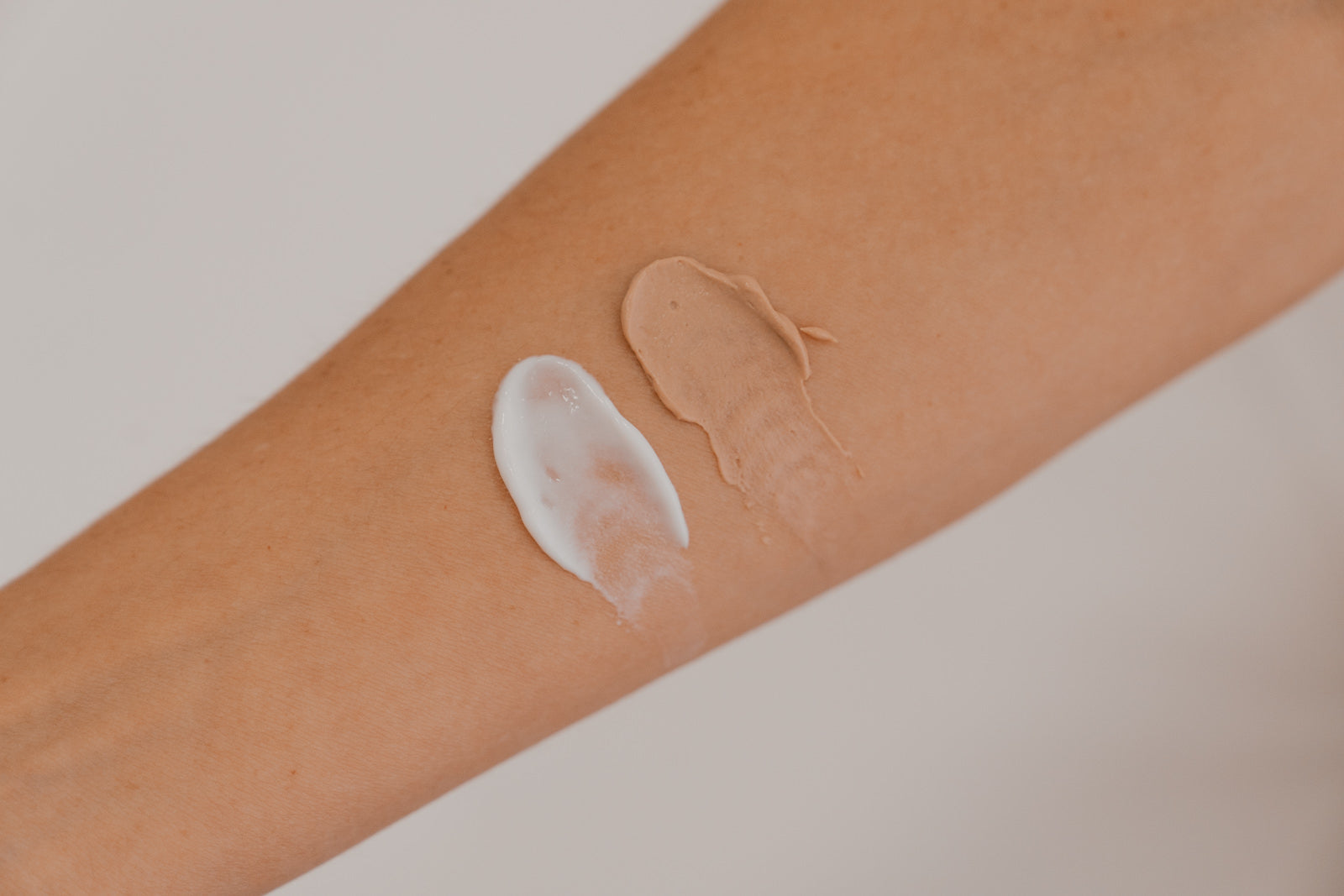
Available in tinted and non-tinted options
-
Free from chemical sunscreens, dyes, fragrances, parabens, and preservatives
The non-tinted version leaves no white cast, making it ideal for photos and daily wear. The tinted option offers a soft matte finish that can even replace a light foundation step.
This matters because sunscreen only works if you actually wear it and reapply it.
Protection + Restoration in One Step
Sun exposure doesn’t just create immediate damage. It also weakens the skin barrier over time.
UV-X goes beyond basic protection. It includes:
-
Ceramides to replenish and strengthen the skin barrier
-
Vitamins C and E to fight free radical damage and help repair existing photodamage
That means you’re not just preventing harm. You’re actively supporting skin recovery and resilience. With daily use, you can experience better protection from cumulative sun damage; reduced visible signs of past UV exposure; and improved skin texture and hydration.
This is why sunscreen is considered the most important anti-aging product in any routine.
The Bottom Line
UVA ages. UVB burns. Both contribute to long-term skin damage.
Broad-spectrum protection isn’t optional if you care about maintaining collagen, preventing hyperpigmentation, and preserving healthy skin. Think of UV-X Mineral Sunscreen as your daily essential — the final step that seals in your routine and protects everything you’ve invested in underneath.
Protect today. Repair continuously. Support your skin for the long term.







Leave a comment (all fields required)